Anodes or Galvanic Isolator – Which To Choose??
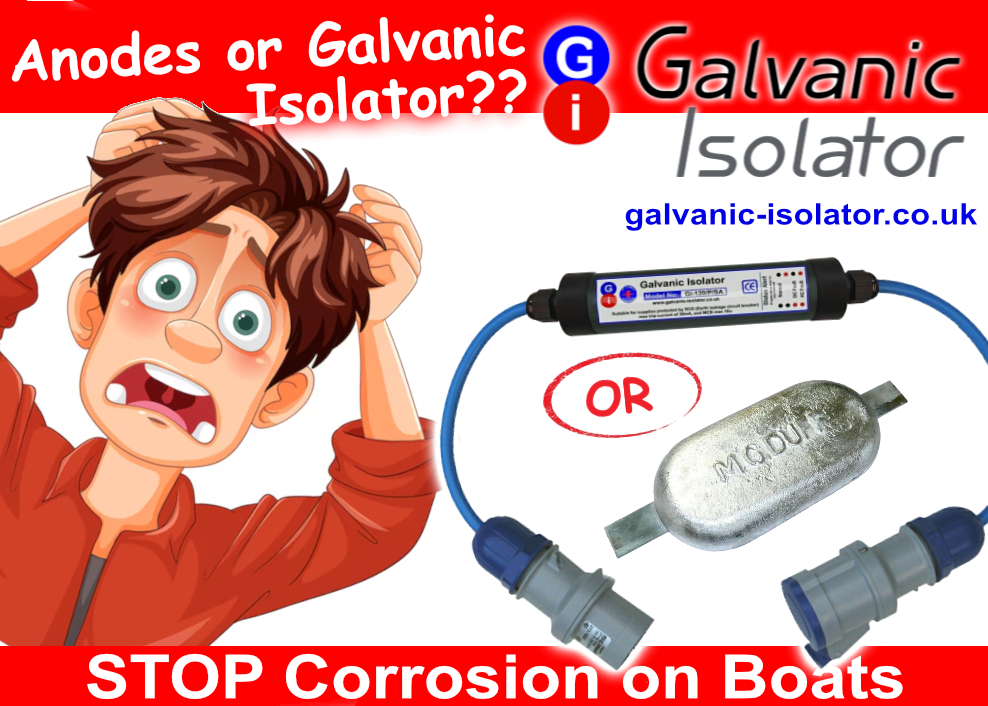
The answer is (of course) both. They do different jobs and work best together.
Sacrificial anodes are zinc, aluminium or magnesium blocks fitted below the waterline. They corrode instead of important underwater metalwork such as propellers, shafts, stern gear and skin fittings.
However, anodes alone may not be enough when your boat is connected to shore power.
ANODES: protect underwater metals by sacrificing themselves.
GALVANIC ISOLATORS: prevent corrosion caused by low-voltage currents travelling through the shore-power earth connection.
TOGETHER: They offer much better protection while your boat is plugged in.
When you connect to marina electricity, your boat is linked to the shore earth and, potentially, to other boats. This is essential for electrical safety, but it can also create the conditions for galvanic corrosion. Small electrical differences between metals can cause current to flow through the water, accelerating corrosion on vulnerable underwater fittings.
A galvanic isolator is fitted into the shore-power earth connection. It blocks the small galvanic currents that cause corrosion, while still allowing fault current to pass safely if there is an electrical problem.
This means your anodes are not being asked to work overtime protecting against marina-related stray currents. They should last longer and can concentrate on their proper job: protecting nearby underwater metalwork.
**Did you know?** An anode only protects a limited area—roughly six times its own length. As it wears away, its effective protection range reduces too.
If your anodes disappear quickly, it is NOT a good sign. It can mean they are dealing with excessive galvanic current. A galvanic isolator BLOCKS that current, giving your boat better all-round corrosion protection.
For more info, please take a look at our website. https://galvanic-isolator.co.uk/all-about-galvanic-isolators/